Galungan is one of Bali’s major and most important Hindu festivals. This celebration is to commemorate the victory of “Dharma”, or good over the “Adharma”, or evil. The date of the event changes every year since it follows the 210-day calendar system called “Pawukon”, so it’s held twice a year. This event takes place for ten consecutive days, where the festival’s opening day is marked by the celebration of Galungan, which celebrates the gratitude to the gods and the ancestral spirits by inviting them down to earth to dwell in the home of their descendants. The closing day is called “Kuningan”, which signifies the deities ascending back to the heavens.
The festival is very important for the Balinese, similar to Nyepi or New Year when everyone returns and rejoices with their families.
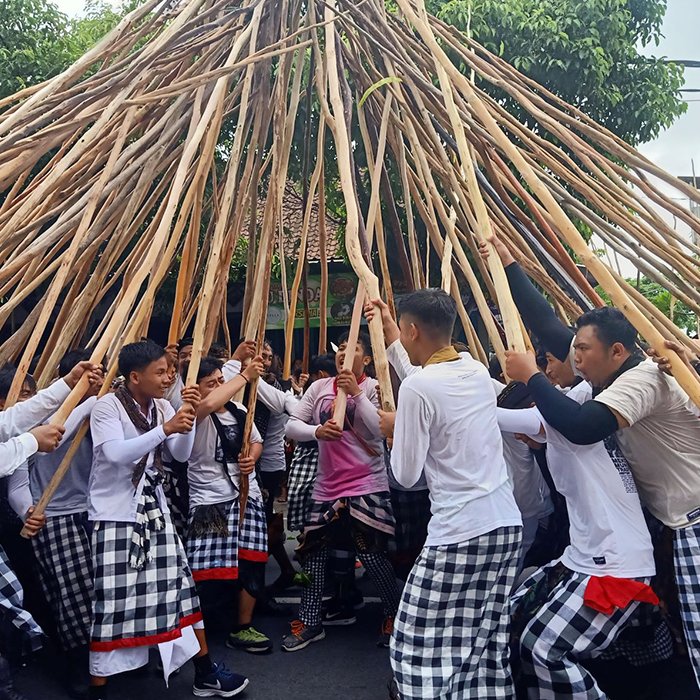
The entire island will be made extra special during the festival with all kinds of traditional decorations. Most special is the tall bamboo pole called ‘Penjor’ decorated with young coconut leaves, fruits, and flowers set up at the entrance of every house and temple.
A ceremony called Ngelawang is performed during Galungan in every village. It is a ritual to expel evil and any negative spirit, which is performed by ‘Barong’ – a divine protector in the form of a mythical beast. The barong is invited into homes throughout the village to restore the balance between good and evil.
During the Kuningan closing festival, you will see a special offering made of yellow turmeric rice. This is the color of the god Wisnu, the protector and member of the Hindu trinity. Also, it is believed that at the event, the Supreme God Sang Hyang Widi is invited to earth to give blessing for all the people as a closure to the series of Galungan festivals. This is a fascinating festival to observe and be a part of if you’re visiting Indonesia in November.