

Indulge in Cambodia’s living culture. From sunrise at Angkor Wat to hidden forest sanctuaries and a West Baray boat safari.
Few places in the world embody the seamless blend of culture and spirituality as profoundly as Cambodia. While the grandeur of Angkor’s temples often dominates the imagination, the true essence lies in how these sacred spaces continue to shape the rhythms, beliefs, and identity of the Kingdom today.
Exploring Cambodia’s temples is more than sightseeing—it is an immersion into a living cultural landscape. Every carved lintel, sandstone face, and hidden shrine carries centuries of devotion and artistry. From dawn breaking over Angkor Archaeological Park to the stillness of jungle-wrapped sanctuaries, each moment reveals another layer of Cambodia’s enduring spirit. A temple journey is best experienced slowly and with intention. Sunrise at Angkor Wat offers a serene spectacle as towers emerge from darkness and the moat mirrors soft morning hues. As daylight strengthens, intricate bas-reliefs come alive, narrating mythology, celestial dancers, and the legacy of the Khmer Empire. Nearby, Bayon’s serene faces gaze over visitors, while Ta Prohm’s roots entwine ruins, symbolizing nature’s quiet reclamation.
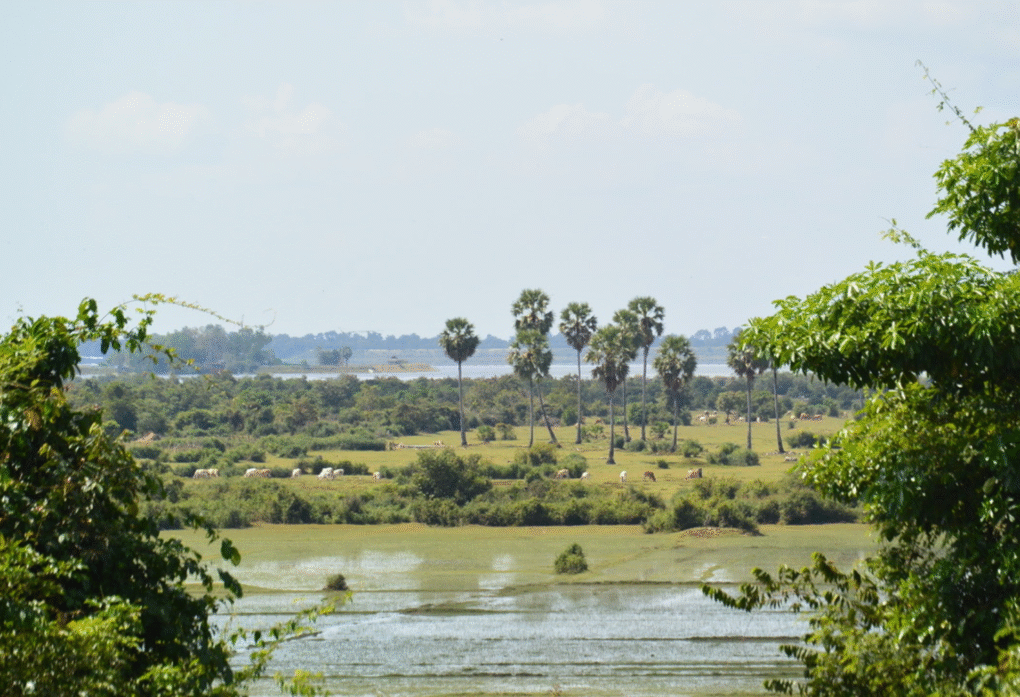
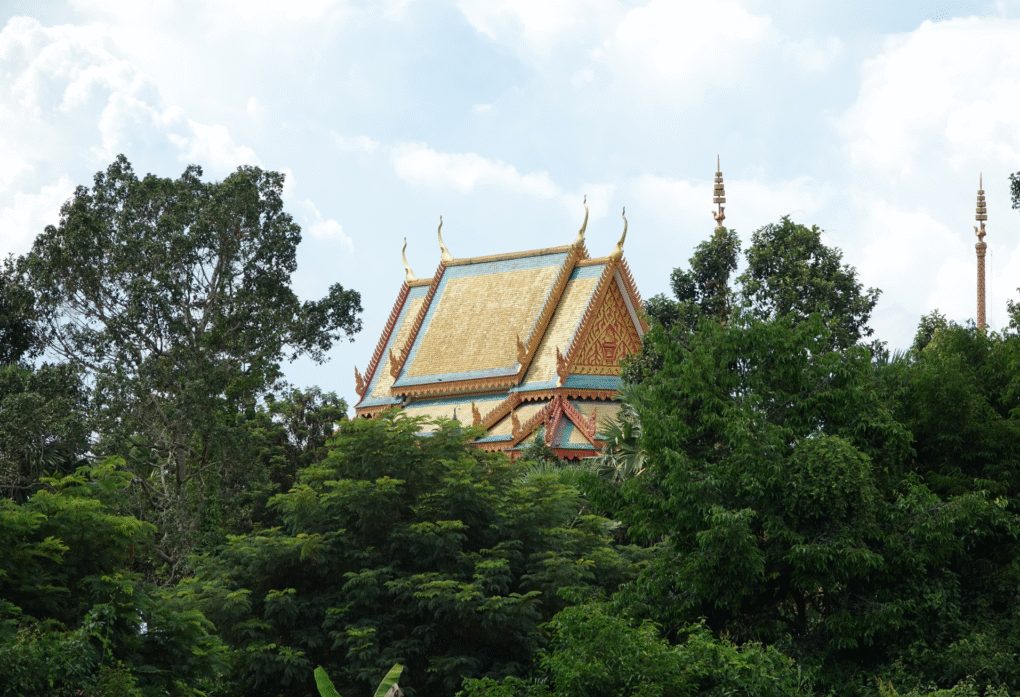
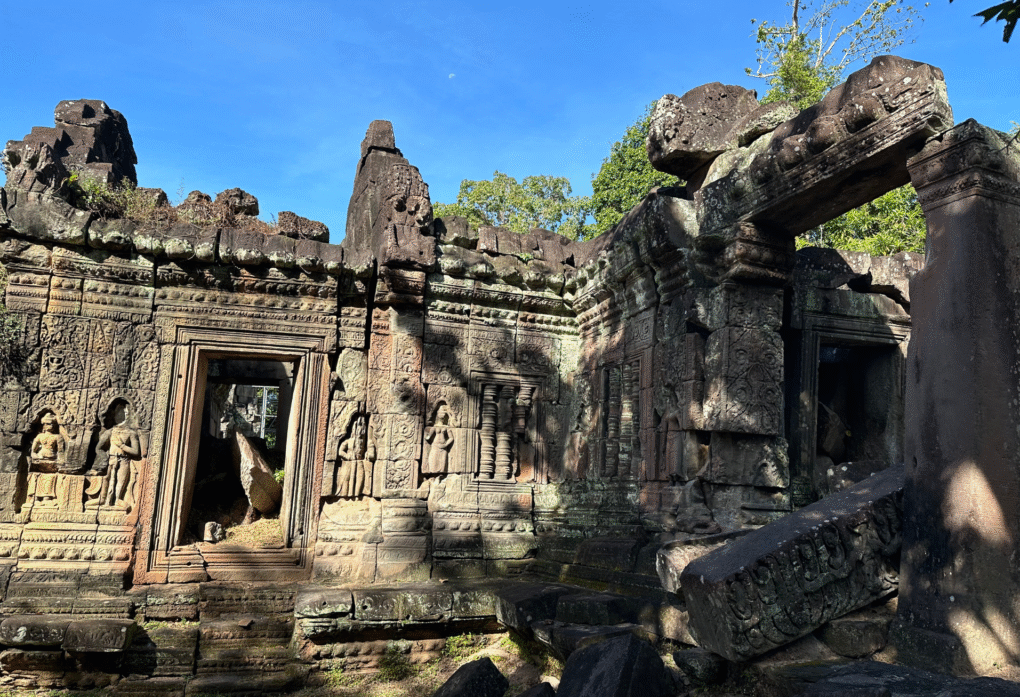
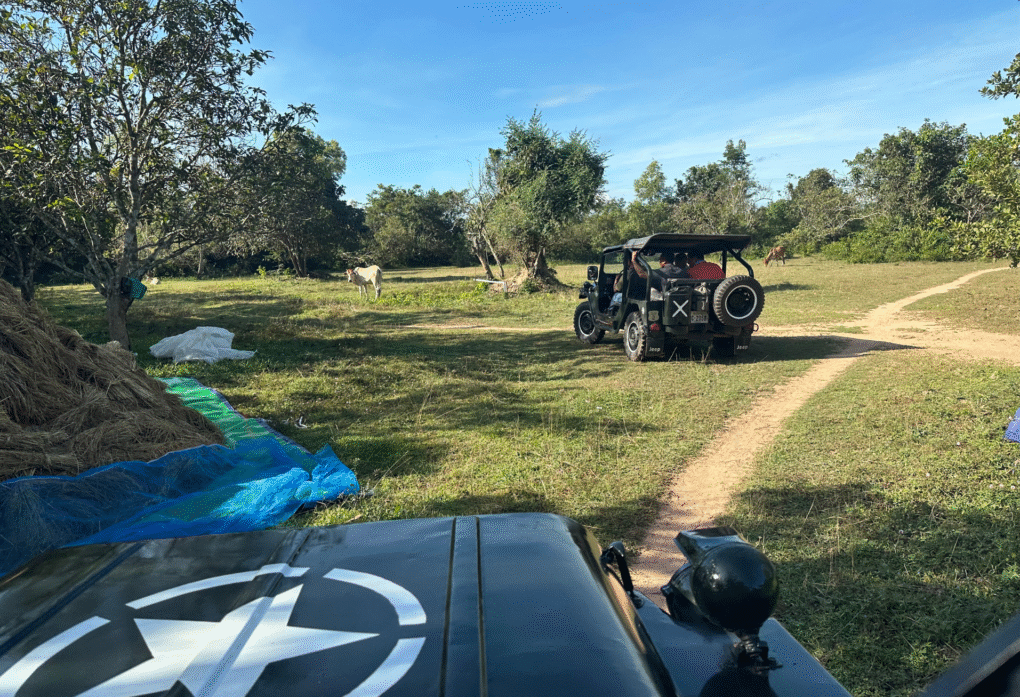
Beyond the main routes, hidden treasures await. Khiri’s West Baray Temple Safari introduces travellers to lesser-known sites scattered across countryside tracks and forest clearings. Temples such as Banteay Thom, Chan Ta Oun, and Prasat Cha emerge with cinematic mystery. Apsara carvings linger on forgotten walls, Sanskrit lintels whisper dynastic tales, and Kok Po’s brick sanctuary recalls Cambodia’s Chenla heritage. These are not crowded monuments but sacred spaces where silence and history create a deeply atmospheric experience.
The journey culminates at the vast West Baray, one of the Khmer Empire’s greatest hydraulic achievements. Standing at its immense waters, travellers marvel at the scale of a civilization that, a thousand years ago, built the world’s largest man-made reservoir. Here, culture reveals itself not only through temples but also through engineering, cosmology, and the Khmer’s sophisticated relationship with water, land, and power.
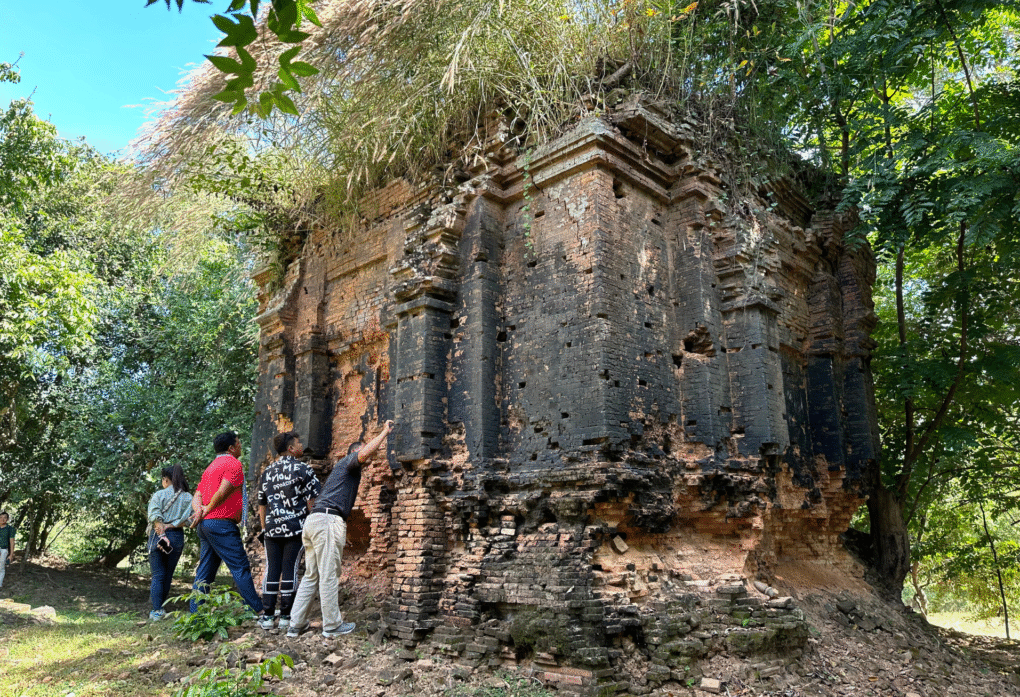
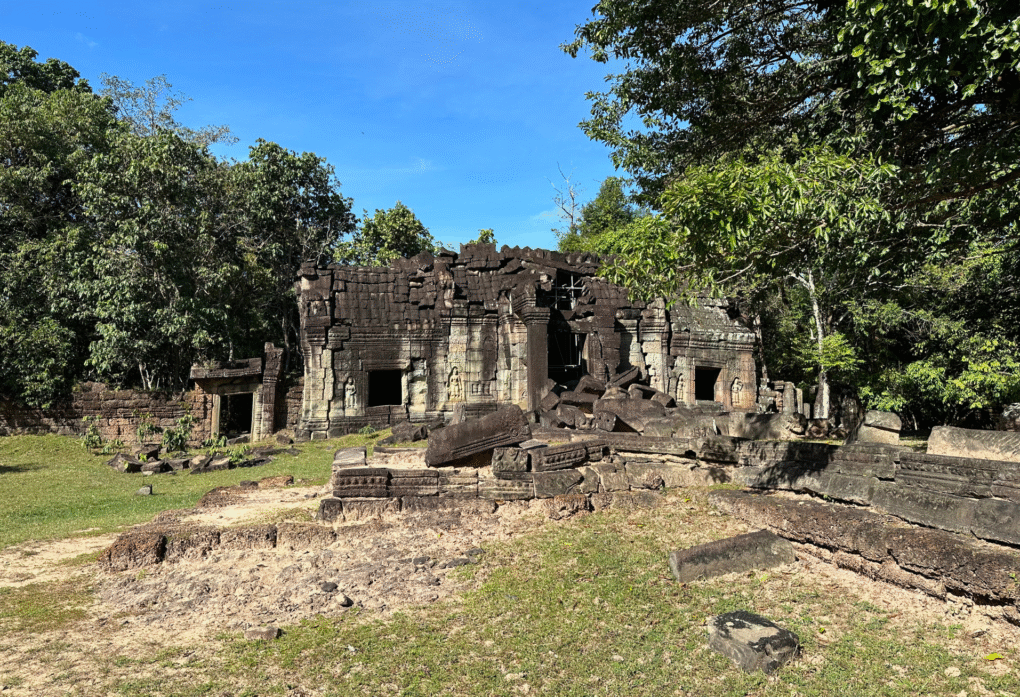
What makes temple touring extraordinary is the living culture surrounding these monuments. Monks in saffron robes walk ancient corridors, incense drifts from pagodas, and village life unfolds beside sacred ruins. These encounters remind visitors that temples remain integral to Cambodian life.
Ultimately, what lingers after a temple journey is not just the scale of monuments but the feeling they inspire: stillness, wonder, and connection to a culture that has endured and adapted. In Cambodia, temples are not relics of the past—they are the living heartbeat of the Kingdom, offering travellers a rare chance to experience culture as something deeply felt.
In Cambodia, temples are not relics of the past—they are the living heartbeat of the Kingdom, offering travellers a rare chance to experience culture as something deeply felt. To begin your immersive temple journey, please contact our experts at [email protected].