

Track the rare yellow-cheeked gibbon deep within Cambodia’s Keo Seima Wildlife Sanctuary alongside indigenous Bunong guides.
Deep in the remote forests of Mondulkiri province, before the rest of the world has stirred, a sound cuts through the mist that stops you completely in your tracks. It begins as a low, haunting moan and builds into something almost operatic — the morning call of the Yellow-cheeked Crested Gibbon, one of the rarest primates on earth. Welcome to Jahoo Gibbon Camp, and quite possibly the most quietly extraordinary travel experience in Southeast Asia.
Cambodia has been steadily carving out a reputation as a destination serious about regenerative travel, and Mondulkiri province sits at the heart of that story. But Jahoo isn’t simply another eco-lodge with good intentions and bamboo interiors. It represents something more rare in the travel industry: a model that actually works — for wildlife, for local communities, and for the visitors lucky enough to find their way there.
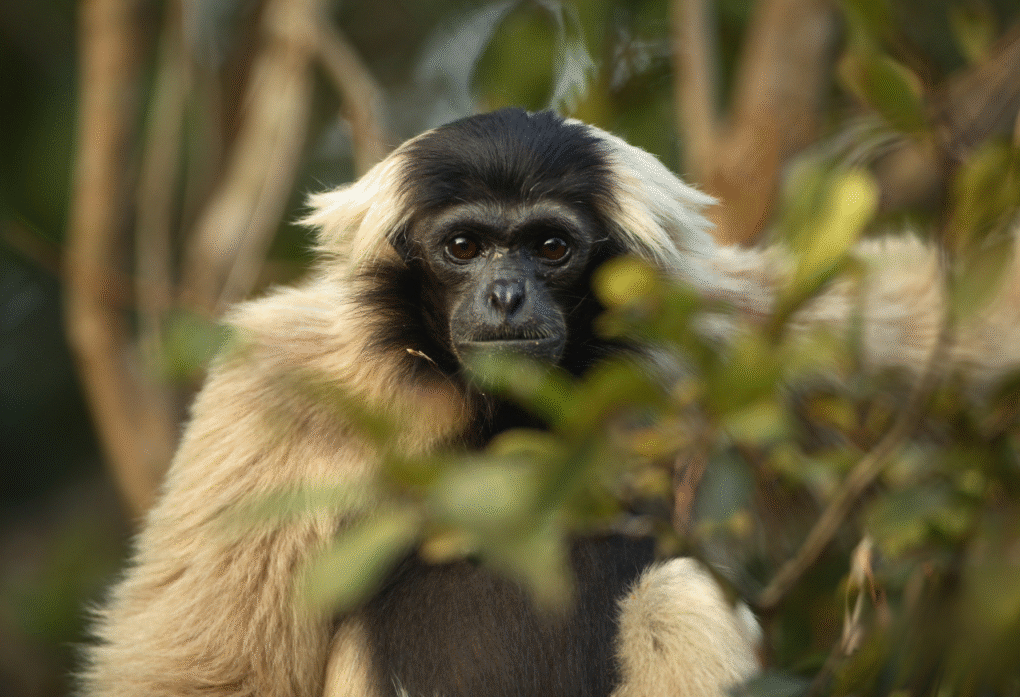
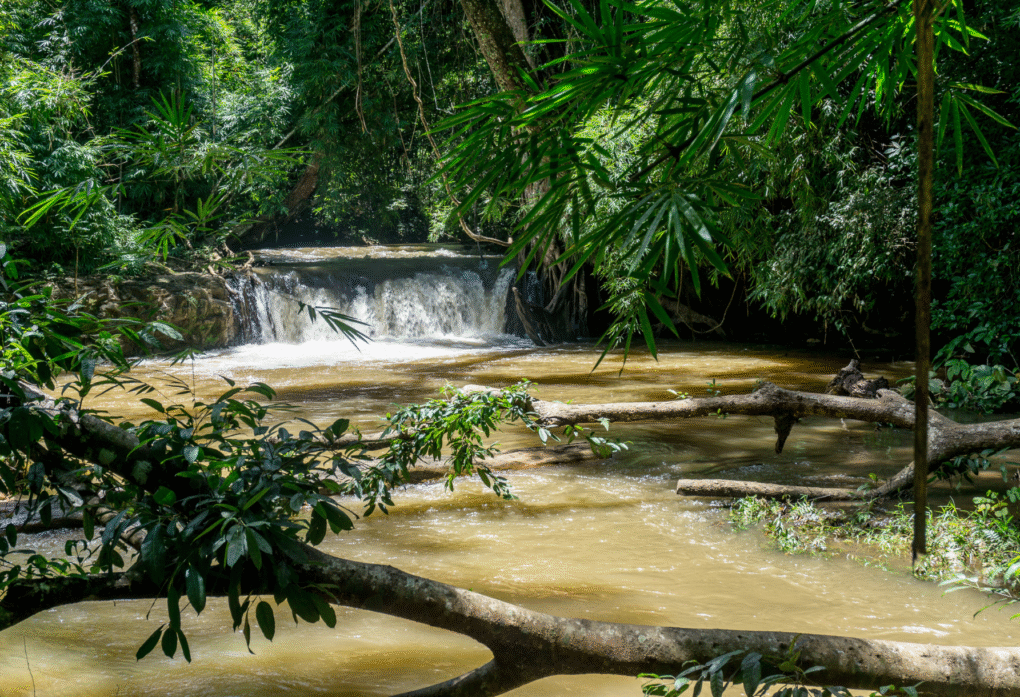
Set within the vast Keo Seima Wildlife Sanctuary, Jahoo was built on a partnership between the Wildlife Conservation Society and the indigenous Bunong community of Andoung Kraloeng, a relationship stretching back to the early 2000s. Years of community consultation followed before Jahoo was formally established, with the painstaking process of habituating gibbons to human presence beginning in 2013. Even the name carries cultural weight — Jahoo (pronounced Ja-who) is the Bunong word for female gibbon, a creature wrapped in local folklore and quiet reverence.
Rise early and join the Gibbon Research Team as they move through the forest at dawn, and you quickly understand why this place has earned its reputation. Keo Seima is home to the world’s largest known population of Black-shanked Douc Langurs — vivid, almost improbably beautiful primates that move through the canopy like living artwork. Pig-tailed Macaques crash through the undergrowth, Germain’s Silvered Langurs watch from above, and for birders, the sanctuary delivers something close to sensory overload: Great Hornbills, the elusive Siamese Fireback, and one of the world’s highest concentrations of woodpecker species, including the Great Slaty and Pale-capped.
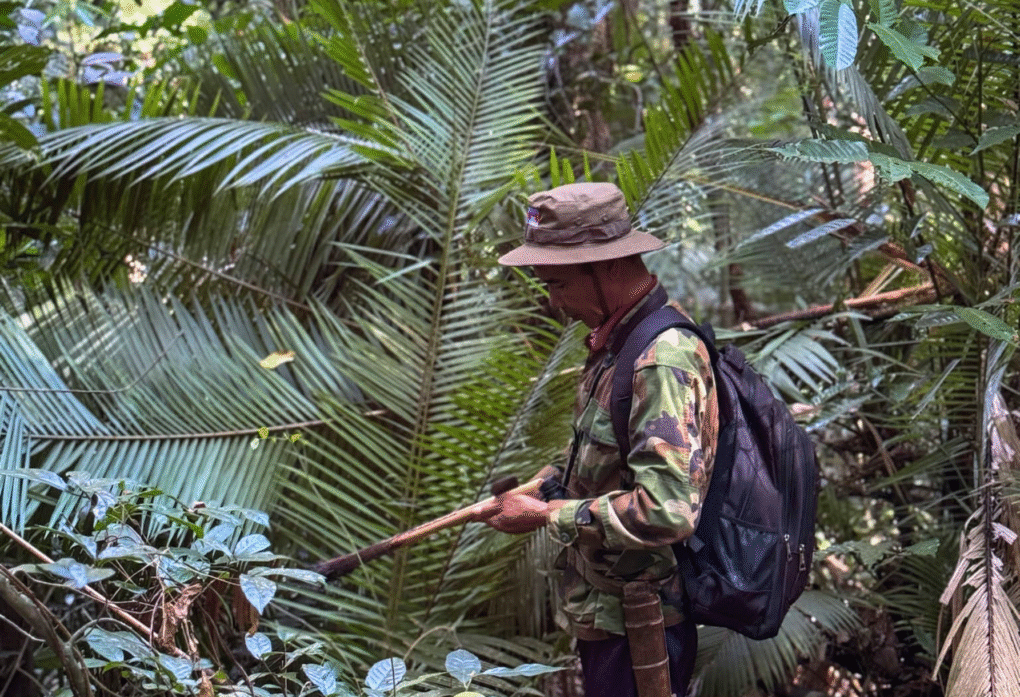
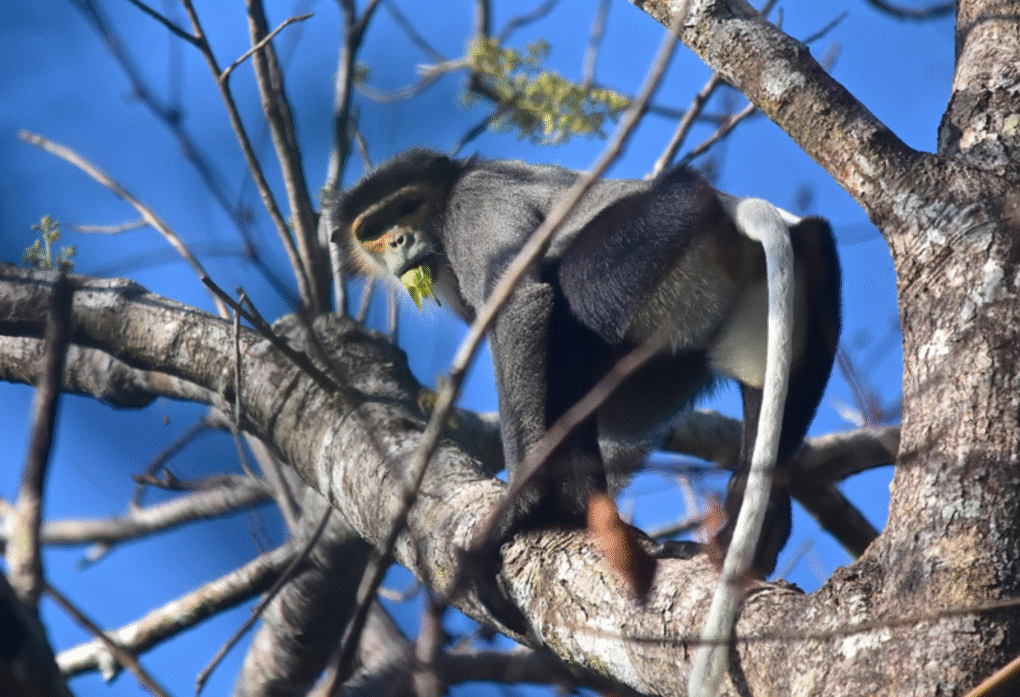
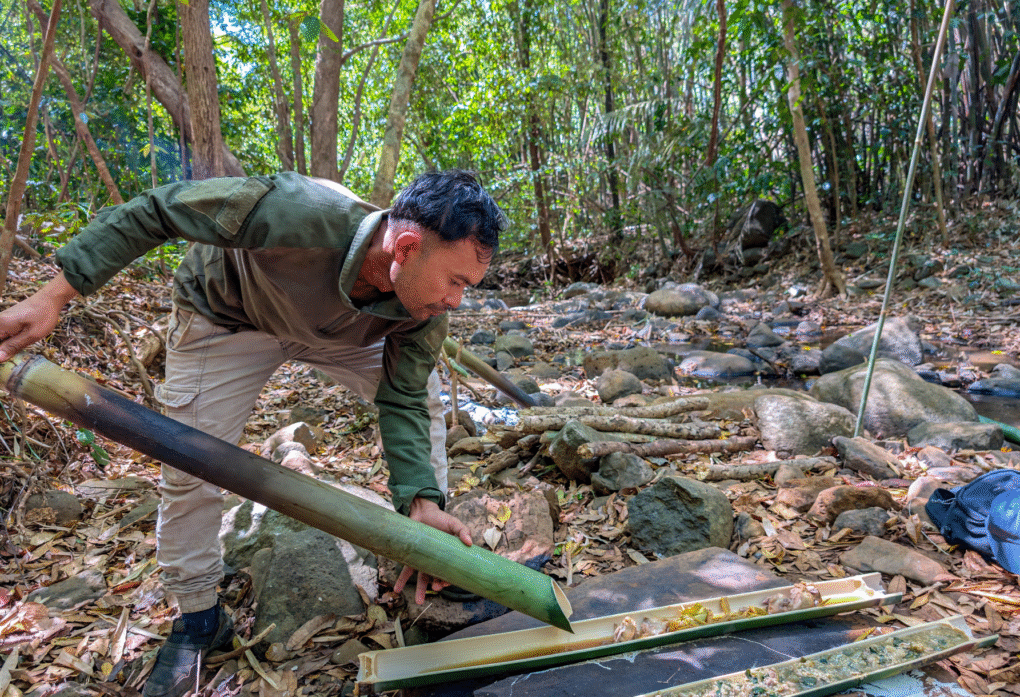
What sets Jahoo apart, though, is how deliberately it connects every visitor experience to something larger. Ecotourism here funds direct conservation action. The guides are Bunong community members whose traditional forest knowledge — accumulated across generations — has been channelled into wildlife research and ethical guiding. Indigenous land rights are protected. Cultural identity is celebrated rather than commodified. The camp operates in alignment with standards set by the International Union for the Conservation of Nature, ensuring that wildlife watching remains a force for protection rather than disturbance.
It’s a model the travel industry talks about constantly and achieves rarely: conservation success tied meaningfully to community prosperity, creating the conditions for both to sustain each other long-term.
For travellers willing to trade the predictable for the profound, Mondulkiri and Jahoo Gibbon Camp deserve a serious place on your radar. The gibbons will be calling. The only question is whether you’ll be there to hear them.
By anchoring every dawn trek in rigorous wildlife preservation and indigenous land rights, this deep-forest sanctuary sets a new global benchmark for high-impact travel that actively restores the planet. To engineer your private conservation expedition into the remote wilds of Mondulkiri, please contact at [email protected].