

Visit Huay Pu Keng in Mae Hong Son for local workshops, meals and cultural exchange, and learn about Karenni culture from local hosts.
In the mountains of Mae Hong Son, a Karenni community is inviting travellers to replace brief observation with time, conversation and hands-on activities with local hosts.
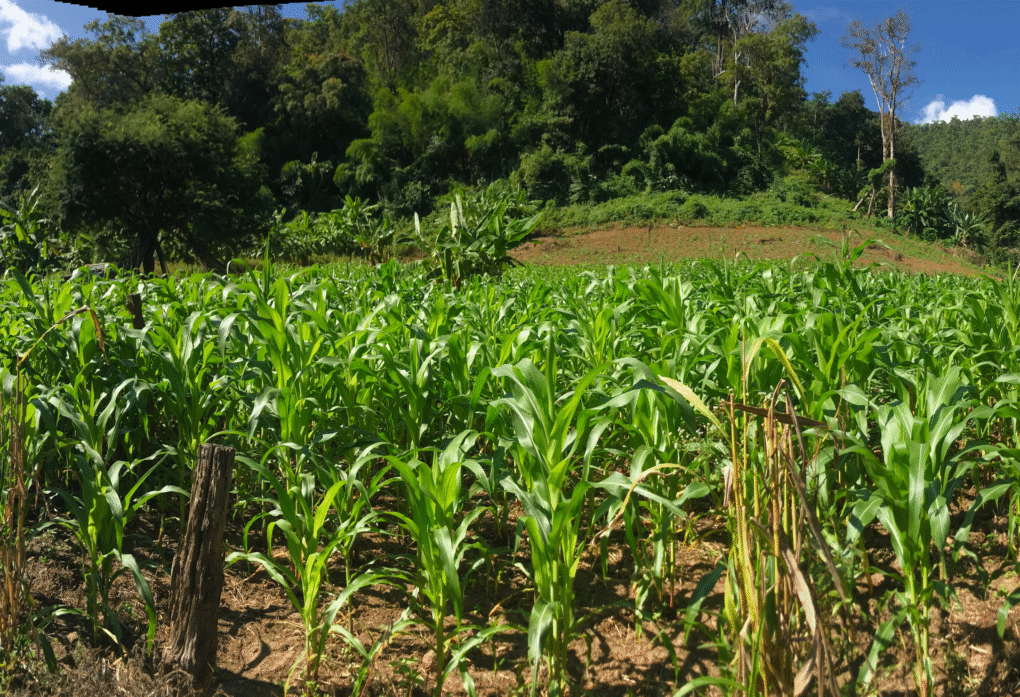
Tucked among the forested mountains of Mae Hong Son, Huay Pu Keng feels far removed from Thailand’s faster and more familiar travel routes.
The journey is part of its appeal. Travellers may approach through the hills or arrive along the Pai River, gradually leaving the busier world behind. What awaits is not a conventional attraction, but a living village where visitors are encouraged to slow down, participate and meet the people who call this remote corner of Northern Thailand ‘Home’.
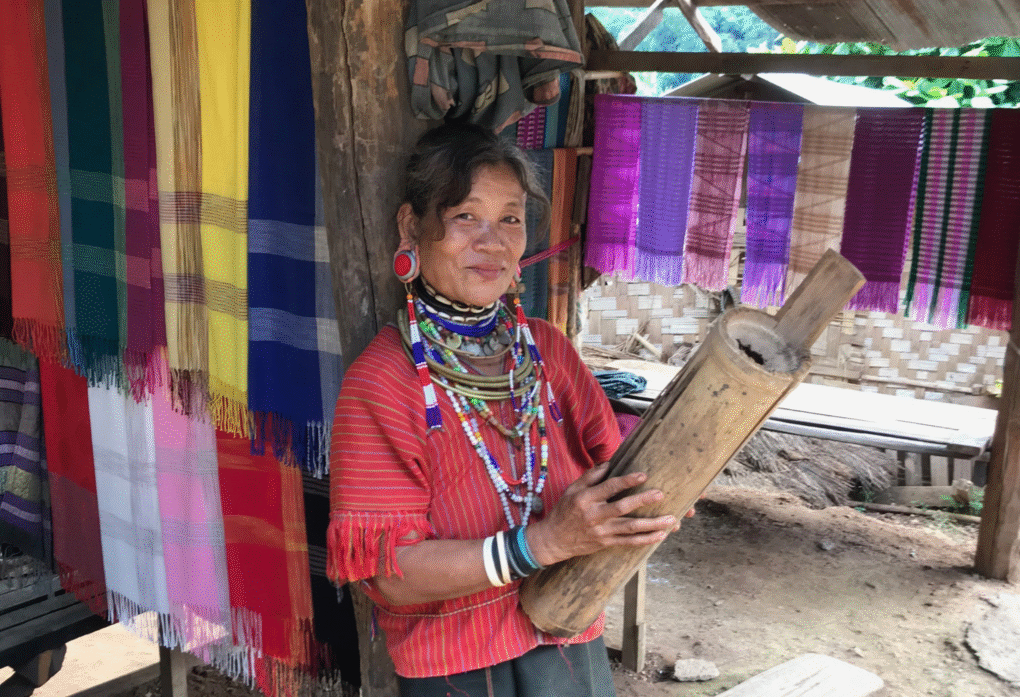
Huay Pu Keng is inhabited by several Karenni communities, including Kayan, Kayaw, Red Karen and Pakayor families, alongside Tai Yai residents. Their histories, identities and traditions are diverse, although outside attention has often focused almost exclusively on one highly recognisable image: the brass coils worn by some Kayan women.
There is, however, much more to understand.
Looking beyond a familiar image
Some visits to Kayan communities have traditionally focused on brief encounters and photography, while offering limited opportunities for visitors to learn about daily life and culture.
Huay Pu Keng offers visitors a different way to engage with the community.
Through its tourism activities, local hosts share selected aspects of their culture and daily life with visitors. They may take on roles as teachers, guides, cooks, craftspeople and storytellers.
These activities give visitors opportunities to spend time with local hosts and learn through direct participation.
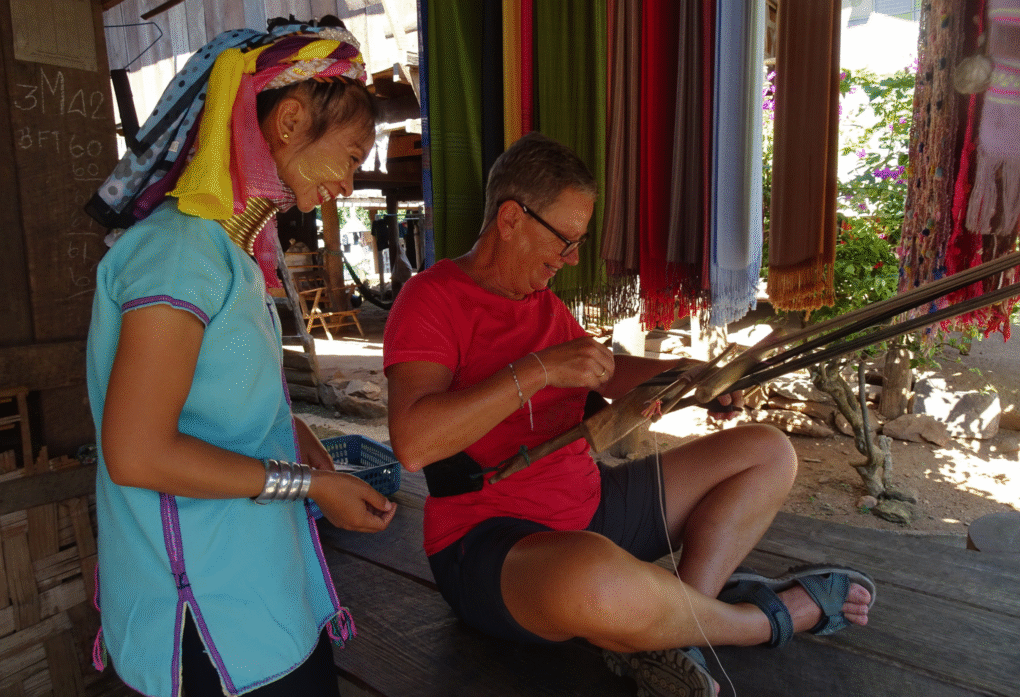
The difference is found in the time spent together. It can be a conversation beside a loom, a shared meal prepared in a family home or the patient process of turning bamboo or wood into something useful. These are simple encounters, but they provide space for travellers and hosts to meet each other as people rather than through a camera lens.
Learning through hands-on experiences
The workshops in Huay Pu Keng are not demonstrations performed from a distance. Visitors are encouraged to sit beside their hosts, try the techniques themselves and learn about the techniques and traditions behind each craft.
A traveller might learn how to weave a colourful headband, discovering very quickly that the movements which appear effortless require considerable skill and concentration.
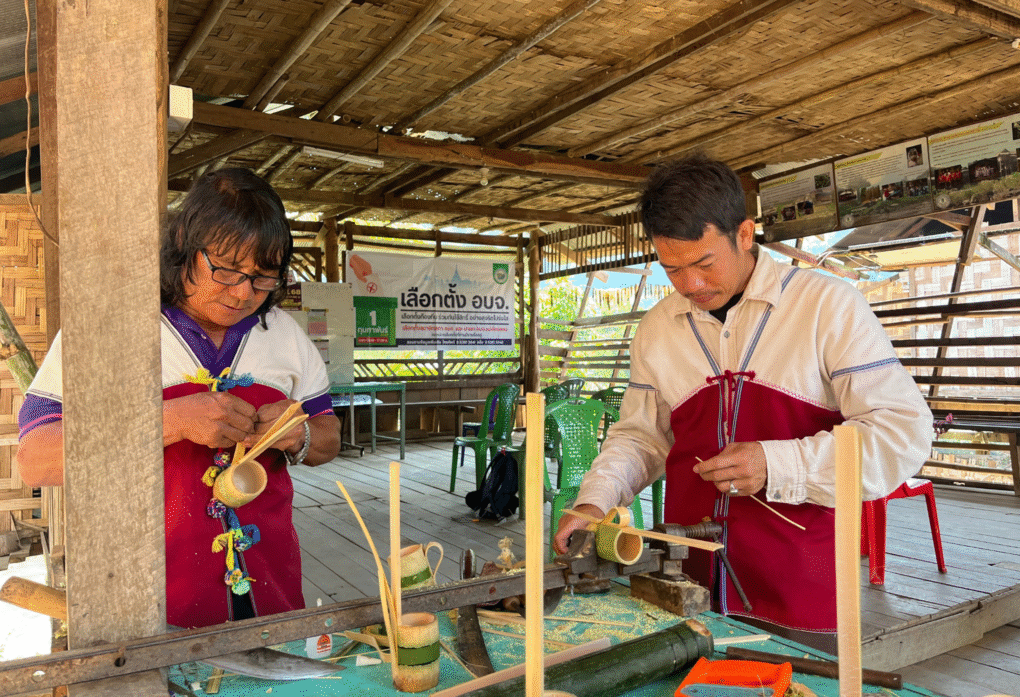
Others may shape a cup from locally available bamboo, carve a bracelet or small figure from wood, or work with brass to create a ring or piece of jewellery. These activities also open conversations about the meaning of different materials, designs and customs within the community.
Depending on the season and the interests of the visitors, experiences may include:
- Weaving and traditional handicrafts
- Bamboo-cup and wood-carving workshops
- Brass jewellery making
- Karenni cooking and shared meals
- Traditional music and dancing
- Agricultural and forest activities
- Tree planting
- Guided walks focused on medicinal plants
Each workshop can be adapted according to the available time, making it possible to include Huay Pu Keng as a substantial day visit or as part of a more immersive overnight stay.
Stories shared around the table
Food is another important part of the experience.
Local hosts can prepare breakfast, lunch or dinner using Karenni recipes and traditional cooking methods. Visitors may also join the preparation, learning not only about the ingredients but also about the role food plays in family and village life.
A meal allows conversations to continue naturally. Residents may choose to speak about their daily routines, their culture and the experiences that brought some Karenni families from Myanmar to Thailand. Guests are equally encouraged to share something of their own lives.
This sense of exchange is central to Huay Pu Keng. The purpose is not to arrive expecting every personal story to be made available, but to listen respectfully to what community members feel comfortable sharing.
Music may follow dinner. The village’s traditional instruments, songs and dances provide another expression of identity, and guests may be invited to participate.
Staying in the village
For travellers seeking a deeper experience, it is possible to stay overnight with a local family.
The homestays are deliberately simple. Guests sleep on a mattress on the floor with bedding, a blanket and mosquito net. Electricity may be limited, and washing arrangements are basic.
This should not be presented as conventional accommodation. Its value lies in the opportunity to experience the rhythm of the village after daytime visitors have left. Morning may begin with breakfast prepared by the host family, followed by another workshop, a walk into the surrounding landscape or further conversation before continuing the journey through Mae Hong Son.
An overnight stay will suit curious and adaptable travellers who value human connection above conventional comfort. For guests who prefer a higher level of accommodation, Huay Pu Keng can instead be visited from a carefully selected hotel or resort in the Mae Hong Son area.
Into the surrounding landscape
The experience extends beyond the village itself.
Local guides can lead visitors through the surrounding hills to learn about medicinal plants, water sources and how local residents use and understand the surrounding forest. Seasonal activities may include visiting agricultural land, gathering mushrooms or bamboo shoots, and learning about traditional uses of natural resources.
Tree planting is also offered as part of the community’s local activities. Although associated locally with Mother’s Day traditions, visitors may be able to take part in tree-planting activities depending on the season and local arrangements.
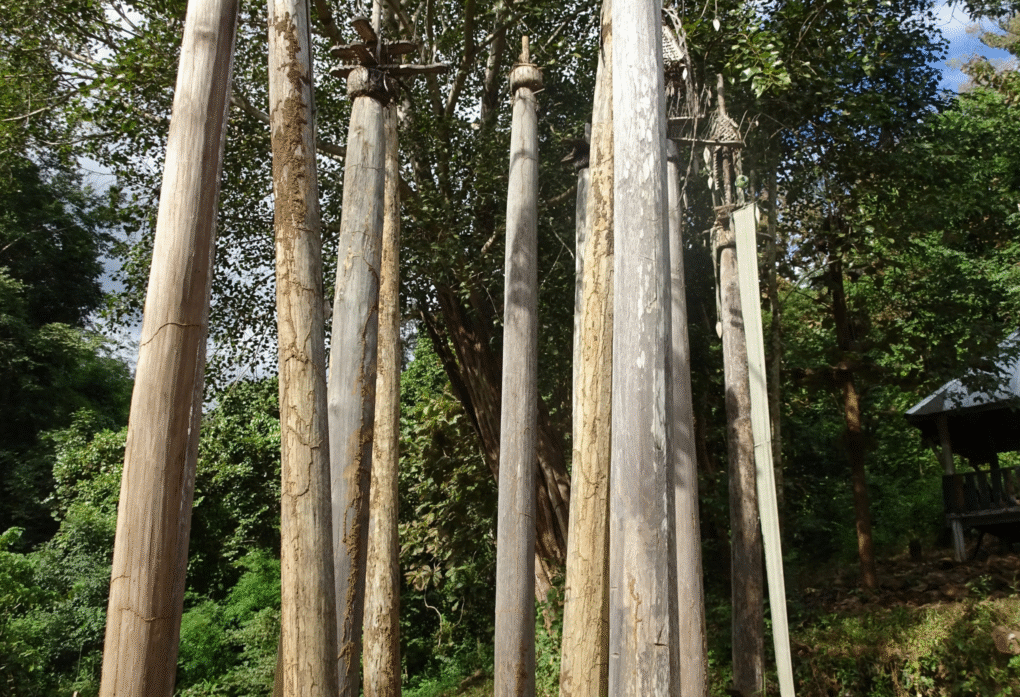
A visit may also include learning about the Kay Htoe Boe festival, an important Kayan celebration, and the sacred spaces connected to it.
More than a village excursion
Huay Pu Keng should not be treated as an isolated stop.
Its setting makes it well suited to a slower journey through Mae Hong Son, where travellers can spend more time in the village and surrounding area.
A well-designed itinerary might combine the village with scenic drives, forest walks, local food, time beside the Pai River and accommodation that reflects the traveller’s preferred level of comfort.
For some guests, this could mean a comfortable base in Mae Hong Son with a full-day community experience. For others, it might include a night in the village followed by a more refined stay elsewhere in the province.
The result is a Northern Thailand journey that gives travellers more opportunities to spend time in the village and surrounding area.
Visiting with respect
Meaningful cultural travel depends as much on the visitor’s behaviour as on the programme itself.
When visiting Huay Pu Keng, travellers should:
- Ask before photographing anyone.
- Take time to speak with hosts rather than treating them as photographic subjects.
- Avoid intrusive questions about physical appearance or personal history.
- Participate in an activity instead of making only a short observational visit.
- Listen to the stories residents choose to share.
- Respect local guidance concerning dress, sacred areas and daily customs.
- Purchase locally produced crafts when appropriate and of genuine interest.
Above all, visitors should arrive ready to learn rather than expecting the community to perform.
Creating a more thoughtful journey through Mae Hong Son
Huay Pu Keng offers an opportunity to reconsider what a village visit can be.
It is not about searching for an unusual photograph. It is about sitting down, trying something new, listening carefully and recognising the knowledge and individuality of the people in front of us.
For travellers willing to approach the experience with patience and respect, Huay Pu Keng offers an opportunity to learn about Karenni culture and spend time with local hosts in Northern Thailand.
Contact Khiri Travel Thailand at [email protected] for current community-based activities, accommodation recommendations and sample Mae Hong Son itineraries featuring Huay Pu Keng.